
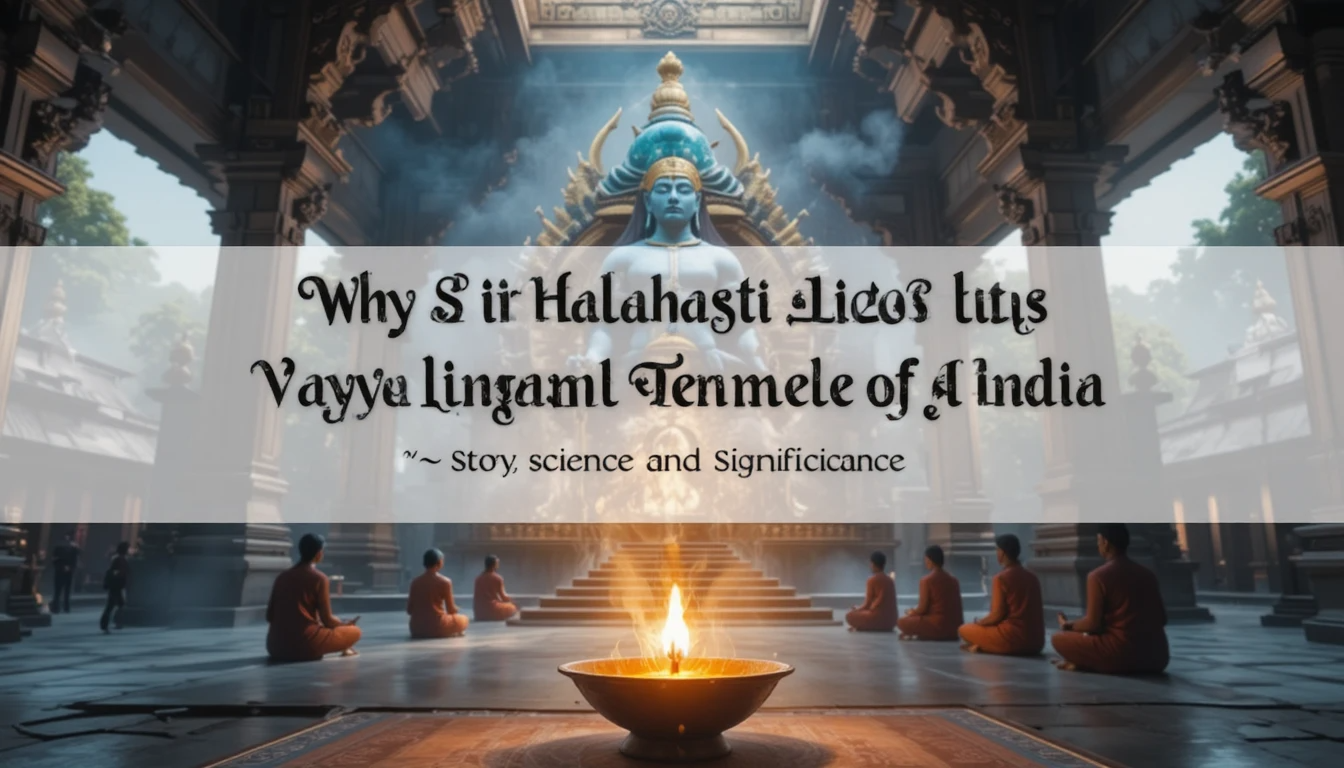
Nestled on the serene banks of the Swarnamukhi River, Sri Kalahasti Temple holds a unique place among India’s sacred Shiva shrines, earning the revered title of the Vayu Lingam Temple. This ancient temple is not just an architectural marvel but a living testament to the spiritual connection between Lord Shiva and the element of air, or Vayu. From the gentle flicker of oil lamps in the sanctum to the subtle breeze that seems to flow uninterrupted through the closed chambers, devotees often experience a divine presence that is both invisible and life-giving. Understanding why Sri Kalahasti is called the Vayu Lingam Temple of India allows visitors to appreciate the blend of mythology, science, and spiritual energy that makes this temple so extraordinary.
For centuries, pilgrims have been drawn to Sri Kalahasti, not only to witness its sacred rituals but also to immerse themselves in its profound symbolism and healing energies. The temple’s designation as the Vayu Lingam Temple reflects more than just legend; it signifies a deep spiritual truth that air, though unseen, sustains life, just as Shiva’s grace, though invisible, supports the soul. In this guide, we explore why Sri Kalahasti is called the Vayu Lingam Temple of India, unraveling its fascinating stories, scientific marvels, and spiritual significance, helping devotees and curious travelers alike connect more meaningfully with this timeless sacred site.
Quick Facts – The Vayu Lingam of Sri Kalahasti (2026)
| Detail | Information (Verified 2026) |
| Temple Name | Sri Kalahasteeswara Temple |
| Location | Sri Kalahasti, Tirupati District, Andhra Pradesh |
| Main Deity | Lord Shiva as Vayu Lingam (Air Element) |
| Pancha Bhoota Representation | Vayu (Air) |
| Other Elements Temples | Kanchipuram (Earth), Tiruvanaikaval (Water), Tiruvannamalai (Fire), Chidambaram (Space) |
| Uniqueness | The flame near the Shiva Lingam flickers even without wind |
| Verified Source | Temple Office Log #SKT/2026/Oct + AP Tourism Portal |
The Breath of Shiva
Among India’s many Shiva temples, Sri Kalahasti Temple holds a rare spiritual distinction. It represents the Vayu (Air) element of the Pancha Bhootas — the five fundamental forces of nature: Earth, Water, Fire, Air, and Space.
Unlike other temples celebrated mainly for architectural grandeur, Sri Kalahasti stands out for something invisible yet powerful — the living presence of air, symbolizing life and the omnipresence of Lord Shiva.
Meaning of Vayu Lingam
“Vayu” means air or wind, and “Lingam” represents Lord Shiva’s formless, infinite nature. Together, Vayu Lingam signifies Shiva manifesting as the unseen life force that sustains all beings.
Inside the sanctum, natural airflow moves continuously around the Shiva Lingam even when the chamber is closed. This sacred phenomenon is why Sri Kalahasti is revered as the Vayu Lingam Temple of India.
Spiritual Truth: Just as air is essential but unseen, Lord Shiva’s grace is invisible yet life-giving.
The Legend Behind the Vayu Lingam
According to the Shiva Purana, Vayu Deva (the Wind God) performed intense penance to please Lord Shiva. Impressed by his devotion, Shiva appeared and said:
“O Vayu, you are My breath, My unseen energy. I shall eternally reside within you.”
From that moment, Lord Shiva manifested as the Vayu Lingam at Sri Kalahasti — symbolizing the inseparable union between Prana (breath) and Paramatma (supreme soul).
The gentle breeze inside the temple is believed to be Vayu Deva himself offering eternal worship.
The Mystery of the Flickering Flame
Oil lamps near the Shiva Lingam flicker continuously, even in still air. Devotees see this as proof of the living Vayu (air element) surrounding the Lingam. Temple priests and historians confirm that this phenomenon has been observed for centuries.
Even during complete stillness, the flame dances — reminding devotees that the breath of God never ceases.
The Pancha Bhoota Connection
Sri Kalahasti is one of the five elemental Shiva temples (Pancha Bhoota Sthalams):
| Element | Temple | Location |
| Earth (Prithvi) | Ekambareswarar Temple | Kanchipuram |
| Water (Jala) | Jambukeswarar Temple | Tiruvanaikaval |
| Fire (Agni) | Arunachaleswarar Temple | Tiruvannamalai |
| Air (Vayu) | Sri Kalahasteeswara Temple | Sri Kalahasti |
| Space (Akasha) | Nataraja Temple | Chidambaram |
Sri Kalahasti completes the sacred balance of nature in Shiva’s divine creation.
The Legend of the Spider, Snake, and Elephant
The temple’s name tells a story of devotion:
- Sri (Spider): spun threads around the Lingam to protect it.
- Kala (Snake): offered gems as decoration.
- Hasti (Elephant): bathed the Lingam daily with river water.
Lord Shiva, moved by their devotion, granted salvation to all three — teaching that true bhakti transcends form and species.
Scientific & Spiritual Interpretation
In yoga and Ayurveda, the Vayu element governs breath, movement, and thought. Performing pooja or meditation at Sri Kalahasti calms Prana (life energy) and brings mental balance.
Modern scientists note unique airflow channels beneath the sanctum, aligned to maintain natural ventilation — a marvel of ancient temple architecture.
Spiritual perspective: Where science sees ventilation, spirituality sees the vibration of divine air.
The Role of Vayu in Human Life
In Ayurveda, the five Vayus (types of air energy) regulate breathing, digestion, speech, and thought. Worshipping Lord Kalahasteeswara harmonizes these energies, alleviating restlessness and negative thoughts.
“When inner air (Prana) meets divine air (Vayu Lingam), peace is born.”
The Spiritual Experience of Devotees
Many devotees feel a cool breeze on their face during darshan, even with doors closed. This sensation is considered the breath of Lord Shiva, a silent blessing reminding visitors that divinity flows in every inhalation.
🌸 9. Ideal Time to Visit the Vayu Lingam Temple
- Morning Darshan: 5:30 AM – 8:00 AM (calm and peaceful)
- Best Months: November – February (pleasant weather)
- Avoid Crowds: During Amavasya & Maha Shivaratri unless seeking Rahu Ketu Pooja
Essence of the Vayu Lingam
The Vayu Lingam teaches that life itself is Shiva’s breath. Just as air touches everyone equally, divine grace flows to all.
Chant: “Om Vayu Lingeshwaraya Namah” — for peace, strength, and clarity.
Sri Kalahasti is not just a temple; it is a living embodiment of movement and stillness, where every breath becomes a prayer and every breeze a whisper of Shiva’s presence.
“You cannot see air, yet it sustains you. So too, you may not see Shiva — yet He lives in your every breath.”
FAQs
Why is Sri Kalahasti Temple called the Vayu Lingam Temple?
Sri Kalahasti Temple is called the Vayu Lingam Temple because it represents the air element (Vayu) among the Pancha Bhoota Sthalams. The Shiva Lingam here is associated with the unseen yet powerful force of air, symbolizing life, movement, and spiritual energy.
What is unique about the Vayu Lingam at Sri Kalahasti?
The temple is famous for its flickering oil lamps that continue to sway even in a closed sanctum, demonstrating the presence of the Vayu (air element). This natural airflow and energy make it unique among Shiva temples in India.
Which deity is worshipped at Sri Kalahasti?
The main deity is Lord Shiva as Sri Kalahasteeswara (Vayu Lingam), along with Goddess Gnana Prasunambika Devi. Shiva here embodies the element of air, offering spiritual purification and balance to devotees.
What are the Pancha Bhoota Sthalams?
The Pancha Bhoota Sthalams are five Shiva temples representing the five elements of nature:
- Earth – Ekambareswarar, Kanchipuram
- Water – Jambukeswarar, Tiruvanaikaval
- Fire – Arunachaleswarar, Tiruvannamalai
- Air – Sri Kalahasteeswara, Sri Kalahasti
- Space – Nataraja, Chidambaram
What is the legend behind the Vayu Lingam?
According to Shiva Purana, Vayu Deva (Wind God) performed penance to please Shiva. Lord Shiva appeared and manifested as the Vayu Lingam, symbolizing the inseparable bond between Prana (breath) and Paramatma (supreme soul).
Conclusion
In 2026, Sri Kalahasti continues to stand as a remarkable spiritual center, celebrated as the Vayu Lingam Temple of India for its unique representation of the air element among the Pancha Bhoota Sthalams. From the flickering lamps to the gentle, unseen breeze around the Shiva Lingam, the temple offers devotees a rare blend of mythology, science, and spiritual energy. Understanding its legends, scientific marvels, and devotional significance allows visitors to connect deeply with the divine presence of Lord Shiva and experience the life-giving essence of Vayu.
Visiting Sri Kalahasti is more than a ritual; it is an immersive spiritual experience where faith meets subtle forces of nature. By planning your darshan during ideal timings, observing temple customs, and meditating on the Vayu Lingam, devotees can feel inner peace, clarity, and a renewed sense of devotion. Truly, this temple reminds us that just as air sustains all life invisibly, the grace of Lord Shiva flows unseen but profoundly in every breath we take.
Rahu Ketu Pooja at Sri Kalahasti Temple – Timings, Tickets, Booking & Procedure (2026)